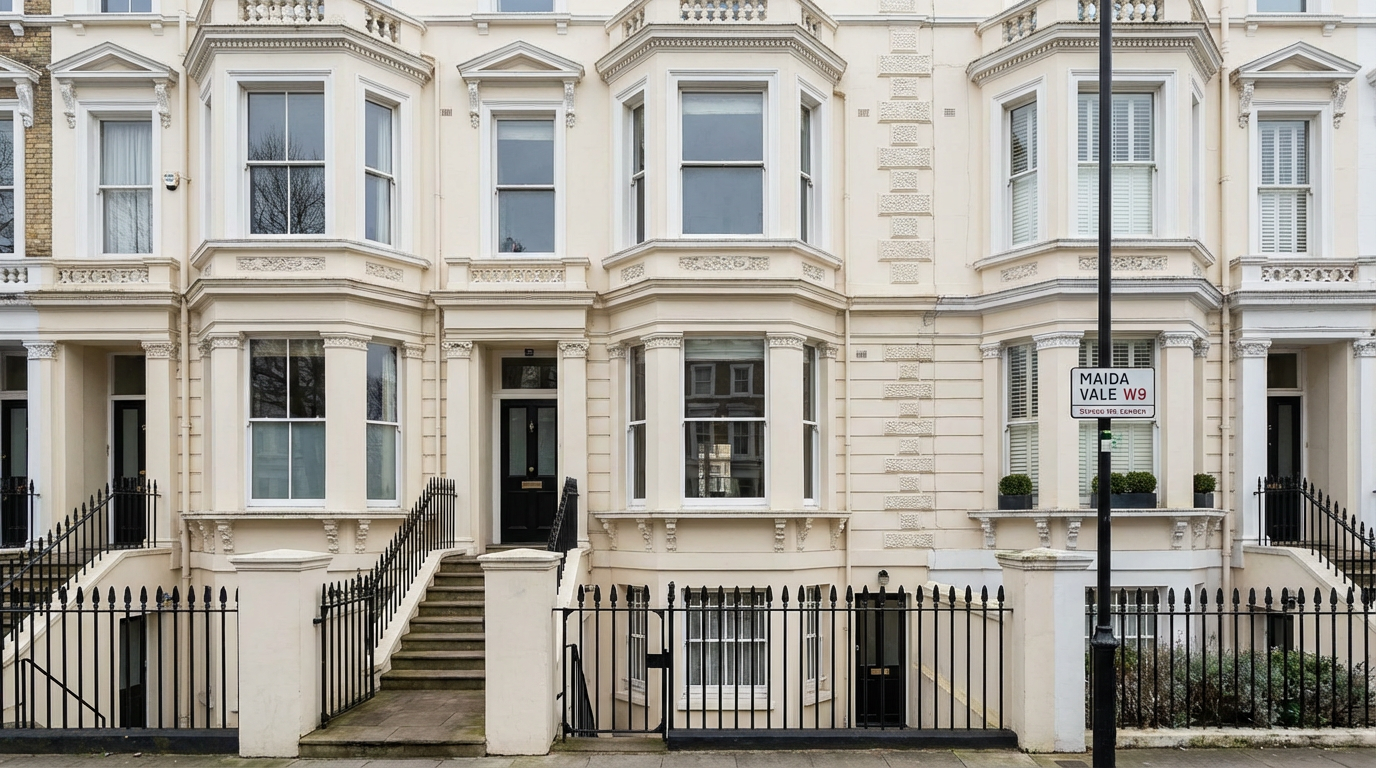
Basement conversions have transformed some of London's most valuable streets. In Paddington, Bayswater, Notting Hill and Kensington, what was once a coal cellar or a storage void is now a bedroom, home office or media room worth hundreds of thousands of pounds. But basement conversions are also among the most technically complex and risk-laden building works carried out on residential properties in London. When they go wrong — structurally, waterproofing-wise or in terms of planning and building regulations compliance — the consequences can be severe and the remediation costs catastrophic.
Whether you are buying a property that already has a converted basement, or considering commissioning a basement conversion on your own home, here is what a building surveyor needs to assess.
The London Basement Market: Context
The basement conversion boom in London accelerated in the 2000s and 2010s as property prices rose faster than the cost of construction. In prime Kensington, Chelsea and the W2 postcode, basement extensions became de rigueur for wealthy homeowners wanting to add space without moving. At the peak of the boom, some properties had double-depth basements extending beneath the entire garden footprint.
This has left the London housing market with a substantial number of basement conversions of widely varying quality. Some were carried out by specialist contractors under full structural engineering oversight with properly designed and installed waterproofing systems. Others were done more cheaply, by less experienced contractors, with inadequate structural engineering and waterproofing that was wrong for the conditions.
As a surveyor, I approach every property with a basement conversion with the same question: do I have confidence that this was done properly?
Structural Risks: What Can Go Wrong
Underpinning and Temporary Works
Creating a basement in a property that didn't previously have one — or deepening and extending an existing one — requires underpinning the existing foundations. This is a specialist structural operation involving temporarily supporting the existing load-bearing walls while new, deeper foundations are constructed beneath them.
Inadequate temporary works during underpinning are the most common cause of serious structural damage during basement conversions. I have surveyed properties where underpinning carried out without adequate propping of the floor above resulted in significant cracking to internal and external walls. In the worst cases, party walls have been damaged, triggering disputes under the Party Wall etc. Act 1996 — see our article on party wall agreements.
Soil Conditions and London Clay
London sits on a thick deposit of London Clay — a material that behaves very differently under a basement than under a conventional foundation. London Clay is highly susceptible to swelling when wet and shrinkage when dry. It also has a tendency to heave (expand upwards) when load is removed — for example, when soil is excavated for a basement.
A basement constructed on London Clay without adequate structural consideration of heave can experience ongoing floor movement. I have surveyed basements where the floor slab had lifted by 20–30mm, buckling the internal finishes and causing cracking to the walls above.
Structural Integrity of Retaining Walls
The walls of a basement are retaining walls — they hold back the soil on the other side. They must be designed to resist the lateral pressure of the soil, and in London Clay conditions this means they need to be robust. Thin unreinforced blockwork basement walls are inadequate. I check for horizontal cracking, bulging and signs of movement in all basement retaining walls.
Waterproofing: The Most Common Failure
Waterproofing a basement in London is not a simple job. Below-ground structures in London Clay in a high water-table environment need a properly engineered waterproofing strategy, usually designed in accordance with BS 8102 (the British Standard for the protection of below-ground structures from water ingress).
The Three Waterproofing Types
BS 8102 recognises three types of waterproofing systems, which are used individually or in combination:
- Type A (Barrier protection): A physical membrane applied to the inside or outside of the structure — sheet membranes, cementitious coatings or crystalline waterproofing. Effective when correctly applied but has no tolerance for structural defects.
- Type B (Structurally integral protection): The structure itself is made watertight by using dense, low-permeability concrete designed to resist water pressure. Requires high-quality construction and specialist concrete mixes.
- Type C (Drained protection): A cavity drain membrane system that allows water to enter but channels it to a sump pump for removal. This is the most commonly used system in existing basement conversions in London and is generally the most reliable for retrofit applications.
What I Commonly Find
In surveying converted basements across London, the waterproofing defects I encounter most frequently are:
- Type A internal membrane coatings applied without addressing the underlying cause of water ingress — these bubble, crack and fail
- Cavity drain systems with blocked or undersized sumps, or with no backup pump provision, that overflow during heavy rainfall
- Floor/wall junctions that have not been properly sealed, allowing water to track along the slab edge
- Penetrations through the waterproofing (for pipes, cables, drainage) that have not been properly detailed
- Evidence of active water ingress at the time of survey — staining, efflorescence (white salt deposits), damp patches or standing water
Efflorescence — the white crystalline deposits left as water evaporates from masonry — is a particularly reliable indicator of water movement through basement walls. I look for it carefully on every inspection.
Planning and Building Regulations Compliance
Basement conversions in London require both planning permission and building regulations approval in most cases. The planning rules vary by London Borough and have been tightened considerably since the peak of the basement extension boom. Building regulations approval is required for structural works, waterproofing, fire escape, ventilation and electrical installation.
When surveying a property with a converted basement, I always ask the vendor to provide:
- Planning permission and any associated planning conditions
- Building regulations completion certificate
- Structural engineer's drawings and calculations
- Waterproofing system specification and installation guarantee
- Party wall awards (if applicable)
The absence of any of these documents should be treated with caution. A basement conversion without a building regulations completion certificate may have structural or fire safety issues that could be expensive to remediate and may affect mortgage and insurance.
If You Are Planning a Basement Conversion
If you are considering commissioning a basement conversion on your London property, the sequence of professional appointments should be:
- Building surveyor — to assess the existing building fabric, identify any existing defects and advise on what the structure can accommodate
- Structural engineer — to design the underpinning, retaining walls, waterproofing strategy and temporary works
- Party wall surveyor — given that basement works almost always affect party walls and neighbouring foundations, party wall notices will almost certainly be required
- Planning consultant — if the project is at all complex or if the local authority has restrictive basement policies
- Specialist basement contractor — a contractor with a demonstrable track record in basement conversions, not a general builder who does them occasionally
Summary
Converted basements add enormous value to London properties when done well — and enormous problems when done badly. Whether you are buying or building, a thorough professional assessment of both the structural integrity and the waterproofing is essential. Do not rely on a mortgage valuation or a basic homebuyer report when a converted basement is involved: commission a full Level 3 Building Survey from an experienced surveyor who knows London basement construction.
For a survey on a property with a converted basement anywhere in Central or West London, contact Paddington Surveyors for a free, fixed-price quote.