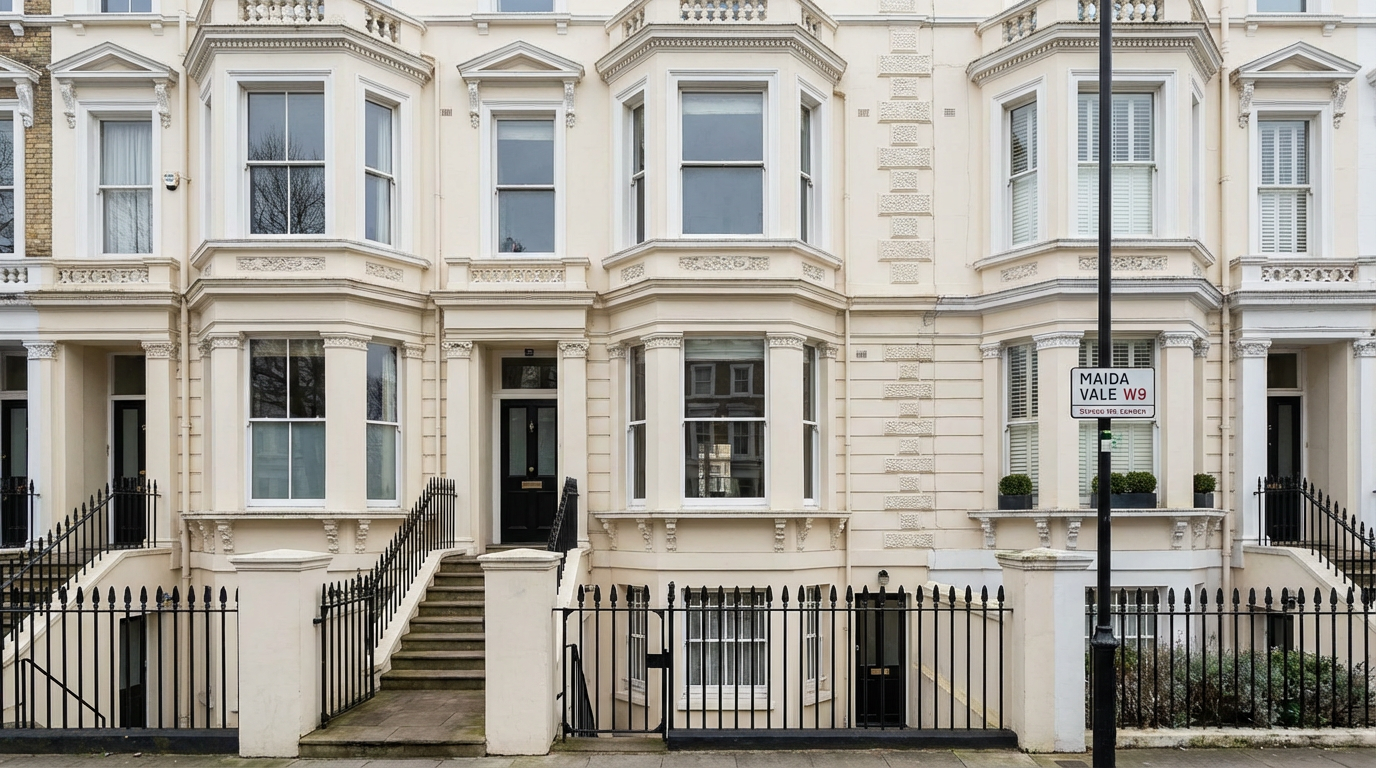
London's Victorian housing stock — built roughly between 1837 and 1901 — is responsible for the city's most iconic streetscapes and remains extraordinarily desirable. The stucco-fronted terraces of Paddington and Bayswater, the red-brick mansion blocks of Kensington and Chelsea, the leafy villa estates of Maida Vale — these are properties people aspire to own. And with values typically running from £700,000 to well over £5 million, they represent enormous financial commitments that deserve thorough professional scrutiny.
I survey more Victorian properties in a typical week than any other building type. In this article, I want to give you an honest account of what to expect — the common issues, the genuine risks and the things you must always check before exchanging contracts.
The Victorian Terrace: A Building Type Unlike Any Other
Victorian terraced houses were built quickly, often by speculative developers who cut corners where they could. The quality varies enormously — compare a grand stucco terrace in Paddington to a modest two-up-two-down in a side street, and you'll see immediately that not all Victorian housing is equal.
What most Victorian terraces share is their basic construction method: load-bearing brick walls with suspended timber floors, a pitched roof with slates or clay tiles, lime mortar throughout, and (in the later Victorian period) a rudimentary damp-proof course of slate or bitumen. The materials and techniques are different from modern construction in ways that matter greatly to how the building performs, how it ages and how it should be maintained.
The 10 Issues I Always Check in a Victorian House
1. The Roof
Original Victorian roofs were slated with Welsh blue slate, which can last 100+ years when maintained. However, many London roofs have been re-covered with artificial slates, concrete tiles or — worst of all — over-felted to hide underlying problems. I always inspect the roof space internally and, where possible, assess the external covering from elevation. Ridge tiles, valley gutters, chimney flashings and parapet copings are the most common failure points.
2. Chimney Stacks
Victorian London terraces typically have between two and four chimney stacks per house. These are among the most neglected elements of any Victorian property. Cracked flaunching, loose or missing pots, spalling brickwork and failed pointing are universal findings. More seriously, partially collapsed flue liners pose a carbon monoxide risk if gas appliances are in use.
3. Damp — All Types
See my detailed guide to damp in London homes. In Victorian terraces, the priority areas are the ground floor (rising damp risk from failed DPC), the party walls (penetrating damp from rainwater getting behind chimney stacks on the roof), and any basement or lower ground floor.
4. Dry Rot and Timber Condition
The suspended timber floors of Victorian terraces are vulnerable to dry and wet rot, particularly in the sub-floor void (which was often unventilated after original air bricks became blocked over time) and at ground floor joist ends that are built into damp perimeter walls. I check sub-floor voids through inspection hatches and use a borescope camera where direct access isn't possible.
5. Structural Movement and Cracking
London clay means that some degree of movement is almost universal in Victorian terraces. The key question is always whether the movement is historic or active. I assess crack patterns methodically, looking for the distinctive diagonal stepped cracking that indicates differential settlement, and distinguish between cosmetic shrinkage cracks (common and benign) and structural cracks that indicate genuine movement.
6. Extensions and Alterations
Most Victorian terraces in London have been extended, altered or converted at some point. Back additions, loft conversions, basement excavations, internal reconfigurations — all of these can affect the structural integrity of the original building if not done properly. I always ask about the history of works and look for evidence that consent and building regulations approval were properly obtained.
7. Party Walls and Shared Structures
The party walls between terraced houses are shared structures. Any works that have affected the party wall — including beam insertions, opening-up works or the removal of structural walls — should have been carried out under a Party Wall Award. I flag any evidence of works that appear to have been carried out without proper authorisation. See our complete party wall guide.
8. Services
Victorian houses were retrofitted with gas, electricity, water and drainage over decades. The result is often a patchwork of different standards and ages. I recommend a Gas Safe inspection and an NICEIC electrical condition report for all Victorian properties, as the risk of outdated installations is substantial. Lead pipework is also common in older properties — I always check whether this has been replaced.
9. Basement and Lower Ground Floor
Victorian basement conversions are both extremely desirable and extremely challenging. Many were originally coal cellars or servants' quarters and have been converted without adequate waterproofing. A wet basement is a significant and expensive problem — but it's fixable if the right waterproofing system is designed and installed correctly.
10. Planning History and Permitted Development
While not strictly within the scope of a building survey, I routinely flag evidence of extensions or alterations that may not have had planning permission. Your solicitor should check the planning history, but my observations during the survey can alert them to what to look for.
Do I Always Need a Level 3 Building Survey for a Victorian House?
Yes — almost without exception. The complexity and age of Victorian construction means that a Level 2 Homebuyer Report simply isn't designed to address the issues that matter most. A Level 3 Building Survey allows me to access the roof space, inspect the sub-floor void, investigate damp thoroughly and provide detailed advice on every element. Given the values involved in London Victorian property purchases, the additional cost of a Level 3 survey is always justified.