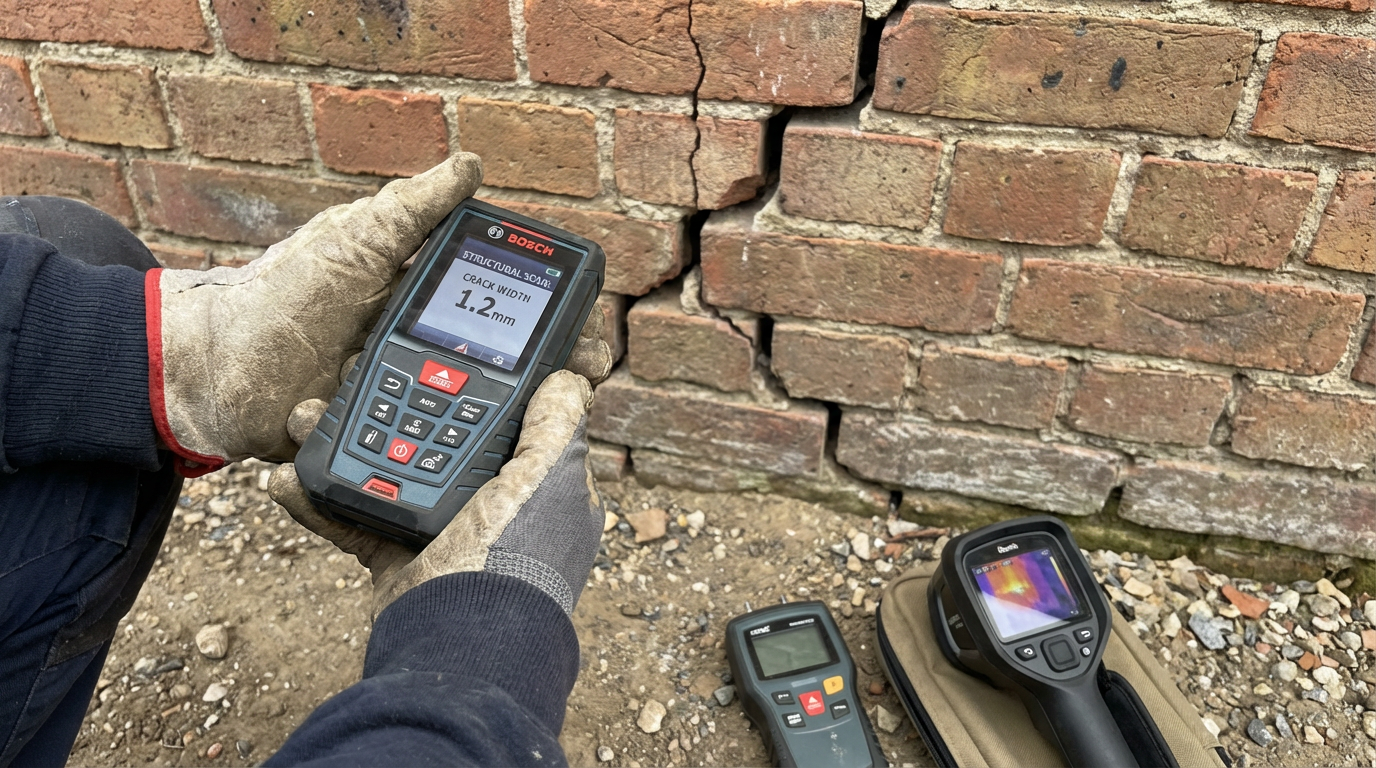
The term "structural survey" is used loosely in the property world — sometimes as a synonym for a full building survey, sometimes to mean a targeted investigation of a specific structural concern. Understanding the difference matters, because the right approach depends entirely on your situation. Getting the wrong survey type wastes money and may not answer the question you actually need answered.
I carry out structural defect investigations every week, most commonly triggered by visible cracks, evidence of movement or an insurer's requirement following subsidence activity. Here's my honest guide to when a structural survey is the right call and what it actually involves.
What Is a Structural Survey?
In common usage, "structural survey" refers to either: (a) a Level 3 Building Survey, which is a comprehensive inspection of a property's overall condition including its structural elements; or (b) a targeted structural investigation, which focuses on a specific concern — usually cracking, movement or a defect that has already been identified.
For the purposes of this article, I'm focusing on the targeted structural investigation — the type of survey you'd commission if you've noticed cracks, been flagged to a structural concern in a previous survey report, or been required to obtain a structural report by a mortgage lender or insurer.
Signs That You May Need a Structural Investigation
- Diagonal cracks from window or door corners: These are classic indicators of differential settlement. A crack running at 45° from the corner of an opening is caused by the building's superstructure settling unevenly. The key question is whether it's still moving.
- Stepped cracks in brick or blockwork: Stepped cracks following the mortar joints are common in Victorian masonry and often indicate soil movement beneath the foundations. They can be either cosmetic (old, stable movement) or structural (active, progressive movement).
- Sloping floors: A floor that isn't level — particularly a first floor that slopes noticeably towards a party wall — can indicate structural movement or failure of a supporting element. Don't assume it's "just settlement."
- Doors or windows that won't close properly: When a building moves, rectangular openings can become distorted, making doors and windows stick or jam. This is sometimes cosmetic but can also be an early indicator of significant movement.
- Bulging or bowing walls: A wall that is not truly vertical — particularly an external wall that appears to be leaning — is a potentially serious structural concern. Lime mortar spalling from horizontal joints in Victorian brickwork ("corbelling") is a common cause.
- Horizontal cracks in basement walls: Horizontal cracking in a basement or lower ground floor wall, particularly at or near floor level, can indicate lateral earth pressure from the retained soil outside. This is a structural issue that warrants immediate specialist attention.
How a Structural Investigation Works
A targeted structural investigation starts with a careful visual survey of the affected area. I examine crack patterns in detail — measuring widths with a vernier caliper, photographing them for documentation, and identifying any evidence of previous repair or monitoring. The pattern, distribution and orientation of cracks are diagnostic: they tell me (usually with high confidence) whether the movement is from subsidence, heave, thermal expansion, beam or lintel failure, or structural overloading.
Where the situation warrants it, I recommend specialist investigations: drain CCTV surveys (drainage defects are a common cause of localised subsidence), trial pits to inspect foundation depth and condition, or structural engineer input for complex beam or frame assessments. I have a network of trusted specialists I work with regularly.
The result is a report that clearly explains what I've found, what I think the cause is, what further investigation (if any) is needed, and what remediation is likely to be required. Where possible, I provide estimated costs.
Structural Survey vs. Level 3 Building Survey: Which Do I Need?
If you're buying a property and you have a specific concern about structural condition, a full Level 3 Building Survey will usually address it within the broader context of the property's overall condition. This is the best value approach when buying. A targeted structural investigation is more appropriate when you already own the property and have developed a specific concern, or when a previous report has flagged an issue that needs specialist follow-up.
For our structural survey services, see structural survey and defect investigation.